Things to Do in Hurghada — The Complete 2026 Guide
We run excursions out of Hurghada every day of the week, and the question we get most often from guests standing in our office at 7 PM the night before their first tour is some version of "so what's actually worth doing here?" This guide is our honest answer to that — not a list scraped from a dozen other sites, but what we tell people when they ask us in person.
Hurghada rewards travellers who look past the resort pool. The Red Sea coast, the Eastern Desert, and two of Egypt's greatest ancient cities — Cairo and Luxor — are all reachable within a single day, and the range of things you can actually do from here is wider than most people expect when they book a week at an all-inclusive.
This guide is organised by category rather than by tour name, so you can plan around what interests you rather than whatever happens to rank first in a booking search. It's grouped around the four types of excursion that genuinely define Hurghada's offering — culture, sea, safari, and adventure — with the kind of planning advice we'd give a guest at check-in.
---
Culture Tours — Day Trips to Cairo & Luxor from Hurghada

Most first-time visitors to Egypt picture the Pyramids, the Sphinx, and the temples of Luxor before they picture the Red Sea at all. None of those sites are near Hurghada geographically, but both Cairo and Luxor are doable as day trips, and for anyone staying five nights or longer, one cultural excursion is almost always worth the early alarm.
Cairo Day Trips — Pyramids, Museums & the Sphinx
Cairo sits roughly 470 kilometres from Hurghada by road, and that distance is really what shapes the whole day. The domestic flight option compresses travel to around one hour each way, which leaves a solid six to seven hours at the sites rather than most of the day spent in a vehicle.
A standard Cairo day trip from Hurghada covers the Giza Pyramid complex — the three main pyramids, the Sphinx, and the Valley Temple — plus either the Egyptian Museum on Tahrir Square (the older, downtown collection) or the newer Grand Egyptian Museum near the Giza plateau, which now holds the complete Tutankhamun collection. These are two separate museums with different locations and different content, and it's a common mix-up, so it's worth checking which one your tour actually includes before you book. Most small-group departures run with an English-speaking guide throughout.
The road option, by minibus or private car, is a longer day — typically 5.5 to 6 hours each way — but noticeably cheaper, and it does give you a look at the Eastern Desert and the Nile Delta crossing along the way, which has its own value if you enjoy watching the landscape change. If budget matters more than time and you're fine with a very early start and a late finish, the road route is a solid choice.
Pickup times vary according to your chosen travel option. For Cairo by plane, most hotels in Hurghada are served with pickups at approximately 6:00 AM before the morning flight. For Cairo by bus or minibus, pickups usually begin at around 2:00 AM to ensure arrival in Cairo early enough to start sightseeing. If you're staying in Sahl Hasheesh, Makadi Bay, or Soma Bay, expect your pickup to be slightly earlier than guests staying in central Hurghada due to the additional transfer time.
Planning note: Cairo day trips are the longest and most demanding excursions available from Hurghada. Build them into stays of five nights or more, and don't book one for your first or last full day — between the 1.30–2.00 AM start and the 21:00–22:00 return, it eats into the rest of your holiday if your stay is short.
→ Browse Cairo day trips from Hurghada
Luxor Day Trips — Valley of the Kings & Karnak Temple
Luxor is closer to Hurghada than Cairo — around 270 kilometres by road — which makes it the more accessible cultural destination and usually the better call for a four-night stay where you only want one historical excursion and don't want it to wipe out your whole day.
The Valley of the Kings, on the West Bank of the Nile opposite Luxor, holds the royal tombs of the New Kingdom pharaohs, including Tutankhamun, Ramesses II, and Seti I. Karnak Temple, on the East Bank, is one of the largest religious complexes ever built — successive pharaohs kept adding to it for over 1,300 years, and the result is a sequence of columns, pylons, obelisks and halls that takes a few hours to take in properly, not the twenty minutes some rushed itineraries allow.
Small-group tours from Hurghada typically cover both the West Bank (Valley of the Kings, Hatshepsut's Temple) and the East Bank (Karnak Temple) in one day, with lunch included. An overnight option exists for travellers who'd rather split the trip across two days instead of doing the return drive the same day — this is particularly worth considering in summer, when the heat makes afternoon site visits hard going.
Closed shoes are far more comfortable than sandals around the Valley of the Kings, especially from late morning onward, when the ground holds heat and the uneven paths around the tombs stop being pleasant in open footwear. Cash in small denominations is also worth carrying for bottled water and tips, since card machines aren't reliably available at the sites themselves.
Planning note: Luxor is at its best October through April, when temperatures are comfortable for walking around exposed sites for several hours. Summer visits to the Valley of the Kings are still possible, but the valley is enclosed on all sides and holds heat intensely from mid-morning onward — the difference between a November visit and a July one is significant, and it's usually the first thing repeat visitors mention when they compare the two.
→ Browse Luxor day trips from Hurghada
Cairo or Luxor — Which Should You Choose?
This is the single most common question we get asked before people book a cultural day trip, so here's the honest breakdown rather than "both are great":
| Cairo | Luxor | |
|---|---|---|
| Travel from Hurghada | ~1 hour by flight or 5.5–6 hours by road | ~4 hours by road |
| Best for | First-time visitors to Egypt who want the Pyramids specifically | Travellers who want temples and tombs without an extreme early start |
| Day length | Longest excursion from Hurghada — 17–18 hours door to door | Long but more manageable — typically 14–15 hours |
| Ideal minimum stay | 5+ nights | 4+ nights |
| Overnight option | Available | Available, and worth it in summer |
If you can only do one, and the Pyramids are the reason you're in Egypt at all, Cairo is worth the long day. If you'd rather see two major sites without the flight logistics or the 4 AM start, Luxor is the more comfortable choice — and for a one-week stay where guests also want to actually rest on their holiday, Luxor tends to be the better fit.
Deciding between a private guide and a small group for either destination? That trade-off is covered in the planning tips further down this guide.
---
Boat Trips — Red Sea Islands & Snorkeling from Hurghada

The reef system off Hurghada is one of the most biodiverse marine environments anywhere — over 1,000 species of fish and 200 species of coral within day-trip distance of the harbour. A boat trip to one of the offshore islands or reef sites is the thing Hurghada does better than anywhere else in Egypt, and it's where most travellers here end up spending at least one full day, whatever else is on their itinerary.
What to Expect on a Hurghada Boat Trip
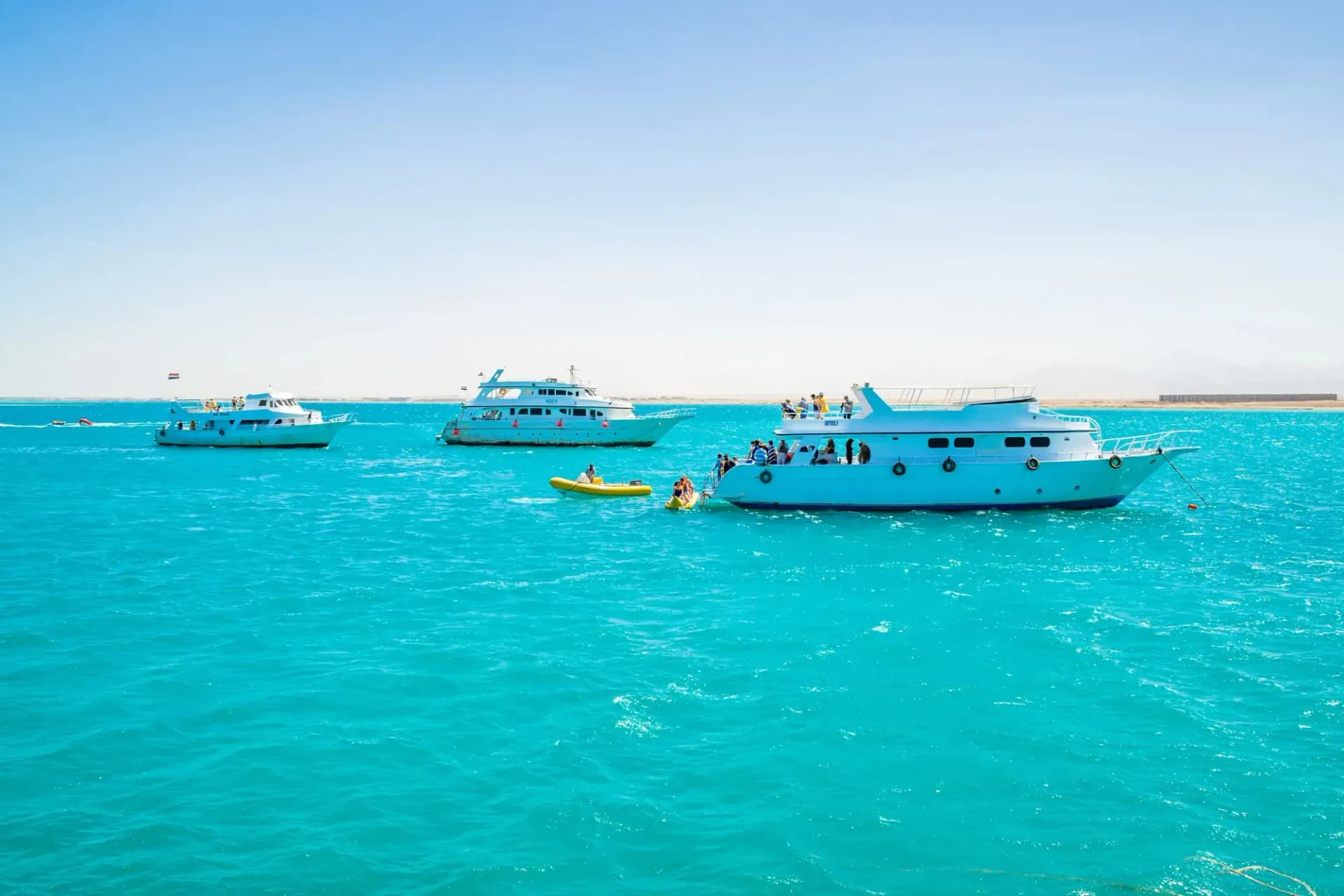
Standard boat tours from Hurghada follow a fairly consistent pattern: hotel pickup around 08:00, transfer to the marina, a 30 to 60-minute boat crossing to the island or reef site, two snorkeling stops usually at different reef systems, a buffet lunch on board, beach time at the island, and return to Hurghada in the late afternoon. All-inclusive pricing covers the boat, snorkeling gear, lunch and soft drinks — equipment is provided and cleaned between uses, so you don't need to pack your own mask and fins unless you'd rather use your own.
Most islands and reef sites are workable for non-swimmers too, with life vests available, and guides are in the water for the whole snorkeling stop, not just standing on deck. The majority of people on our boats are snorkeling for the first time in their lives — it's a beginner-friendly activity, not something you need to have practised beforehand.
Many first-time visitors don't expect how much of the boat crossing is spent looking at open water with no land in sight, or how quickly the wind can pick up once you're a few kilometres offshore, even on a day that felt still on the beach. If you get seasick easily, ask about it when booking — some routes have calmer crossings than others depending on which island you're headed to.
One thing worth packing that most people don't think of: a dry change of clothes and a plastic bag for wet swimwear. It sounds like a small detail, but after several hours on the water, riding back to the hotel in a damp bikini under air conditioning is the one thing guests mention most when asked how the day could've been better.
The Main Islands & Reef Sites Near Hurghada
Dolphin House (Shaab El Erg) is the most requested destination for one reason: a resident pod of spinner dolphins that regularly shows up at the reef. Sightings aren't guaranteed — dolphins don't work to a schedule — but the odds are good enough that most operators, us included, will offer a second morning visit if the first one doesn't produce a sighting.
Magawish Island sits just 7.5 kilometres from Hurghada, the shortest crossing of any island trip from the city. It's quieter than the Giftun Island sites, the reef is in good shape, and the lagoon is calm and easy to wade into. It's the destination that tends to work best for families with young kids, mainly because of that short crossing — less time on open water means less time for a child to get restless or seasick.
Orange Bay on the western shore of Giftun Island is the most photographed beach in Hurghada — a 450-metre shallow sandbar of white sand against vivid turquoise water. Honestly, the photos don't exaggerate it. It's also the busiest island destination, with multiple boats arriving by mid-morning, so an earlier departure time makes a real difference if you want the beach without the crowd.
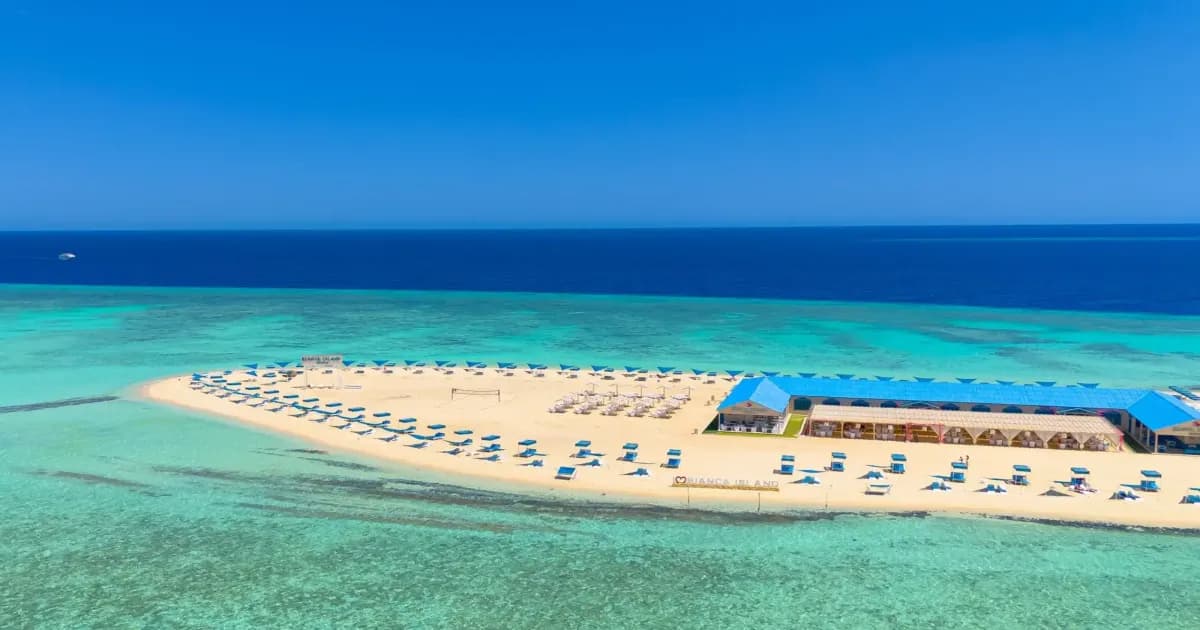
Mahmya Island (Giftun East) operates under strict capacity limits set by the national park authority, so the beach never gets overcrowded the way Orange Bay sometimes does. That's reflected in the price. The reef at Mahmya (Sabina Reef) is one of the best-maintained near Hurghada, and it's the usual answer when someone specifically asks for the nicer, quieter option, even if it costs more.
Abu Dabbab is further south, near Marsa Alam — about 140 kilometres from Hurghada. The bay is known for sea turtle sightings (hawksbill and green turtles are resident there year-round) and occasional dugong sightings. This one only really makes sense as a full-day trip, and it's more relevant if you're staying at a southern Hurghada resort already closer to that direction.
Eden Island sits in deeper water with direct coral entry from the beach — good for snorkelers who'd rather walk into the reef from the shore than jump off the side of a boat.
Which Island Should You Pick?
| If you want... | Choose |
|---|---|
| The best chance of seeing dolphins | Dolphin House |
| A short crossing, calm water, good for kids | Magawish Island |
| The classic postcard beach | Orange Bay |
| A quieter, less crowded premium experience | Mahmya Island |
| Turtles and marine life over beach time | Abu Dabbab |
| Shore-entry snorkeling | Eden Island |
There's no single "best" island — it really depends on whether you're travelling with kids, chasing a specific photo, or just want the quietest possible beach day. Dolphin House and Magawish are the two safest first choices, since both work well for a first Red Sea outing regardless of swimming ability.
→ Browse all sea tours from Hurghada
---
Desert Safaris — Quad Biking, Buggy Rides & Bedouin Camps

The Eastern Desert starts within about five minutes of the Hurghada resort strip. Most guests never look inland at all during a Red Sea holiday, which is a shame — the landscape east of the city is striking, easy to get to, and completely different from anything on the coastline.
What a Hurghada Desert Safari Covers
Desert safari packages from Hurghada typically run three to four hours and combine a few activities into one outing:
A quad bike (ATV) or buggy ride across open desert trails is the centrepiece — usually 45 minutes to an hour of riding across flat, hard-packed desert floor. No prior experience is needed; every rider gets a briefing before departure, and guides ride with the group the whole way, not just at the start.
A Bedouin camp stop is included in most packages — a traditional-style tent where tea is served, and where riders can try a short camel ride and take photos in the desert landscape. These stops are more atmospheric than historically rigorous — it's a cultural experience built for visitors rather than an untouched Bedouin settlement — but guests consistently enjoy it for what it is, and it's better to say that upfront than oversell it as something it isn't.
Sunset departures are worth choosing if the timing works — the Eastern Desert in late afternoon shifts from pale beige to deep copper and orange, and the temperature drops enough to make the ride noticeably more comfortable than a midday slot.
A common mistake is booking a desert safari for the same day as a boat trip and assuming both will be manageable back to back. It's physically possible, but between the sun exposure on the boat and the dust and bouncing of a quad ride, most people are worn out by the second activity. If you want to combine two excursions in a day, desert safari plus a shorter adventure activity works better than desert safari plus a full boat day.
Planning note: Desert safaris run year-round, but summer departures (June to September) at midday are rough going — afternoon and sunset slots are the more comfortable option. Closed-toe shoes are essential; sandals aren't suitable for quad riding, and riders do get turned away at the briefing stage if their footwear isn't appropriate, so it's worth checking before you leave the hotel.
→ Browse desert safari tours from Hurghada
---
Adventure Activities — Beach Quad Biking & Horse Riding
For travellers who want something physically active without the full desert safari format — or who want to fit two excursions into one day — Hurghada's adventure activities are shorter, more focused, and slot easily into an afternoon.
Beach Quad Biking
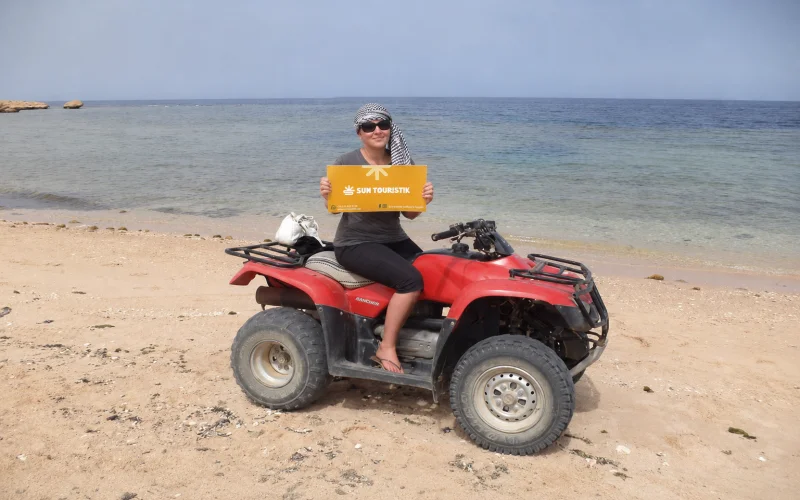
Beach quad biking differs from desert safari quad riding in its route: instead of loops within an inland desert circuit, beach quad routes run from the desert down to the Red Sea shoreline, giving riders a coastal stretch alongside open water before heading back through the desert. That coastal section — open sea on one side, desert behind you, the quad underneath — is specific to this stretch of the Red Sea coast, and it's the moment most guests end up filming on their phones mid-ride.
Tours run approximately two hours including briefing and hotel transfers. Sunset departures are the most popular option, timed so the coastal stretch lines up with the last forty minutes of daylight. Suitable from age six (children ride as passengers on shared quads; solo riding from age sixteen).
One detail worth knowing before booking: beach quad routes depend on tide and beach conditions on the day, so the exact coastal stretch can vary slightly — it's not something operators control, and any reputable one will tell you that upfront rather than promising an identical route every time.
Horse Riding
Horse riding excursions from Hurghada follow a similar dual-terrain route — desert trails and a stretch of Red Sea coastline — at a completely different pace. Riding is guided throughout, and no prior experience is required. Tours run approximately two hours.
Horse riding tends to appeal to a different kind of traveller than quad biking — people who want a slower, more contemplative experience in the same landscape rather than an adrenaline activity. Both are worth considering as a second activity on a day when your first excursion is a morning sea trip.
Beach Quad or Desert Quad — Which One?
This comes up constantly, so here's the short version:
| Beach Quad | Desert Safari Quad | |
|---|---|---|
| Route | Desert-to-shoreline, includes coastal riding | Inland desert circuit only |
| Duration | ~2 hours | 3–4 hours |
| Extras included | Usually just the ride | Bedouin camp stop, tea, camel ride |
| Best for | Shorter afternoon activity, sunset timing | A fuller half-day experience |
| Good second activity on a two-excursion day? | Yes | Less ideal — more demanding |
If you only have a couple of free hours or you're already doing something else that day, beach quad biking is the easier fit. If the desert experience itself — the camp, the camel ride, the longer ride time — is the point for you, go with the desert safari.
→ Browse adventure activities from Hurghada
---
Best Time to Visit Hurghada
Hurghada's climate is desert — sunny and dry year-round, with very little rainfall at any time of year. Temperature and wind are the two variables that actually matter for planning, not rain.
October to April is peak season for comfort, with calm seas and good underwater visibility throughout — October and November in particular hit a sweet spot, warm enough for the beach and cool enough for a comfortable day at Luxor or the Giza plateau. May, June and September sit either side of the summer heat and are usually the better-value months, while July and August bring genuinely high temperatures on land, though the water stays excellent for snorkeling. December through February is cool by Egyptian standards, and the sea can turn choppy with a northerly wind — a light wetsuit or rash vest is worth packing for winter snorkeling, and a light jacket for early morning pickups, since it's properly cold at 6 AM even when the afternoon warms up nicely.
(This section could link out to a dedicated month-by-month "Best Time to Visit Hurghada" guide if one exists on the site — see note below.)
---
Planning Tips for Your Hurghada Trip
Space your excursions. Two excursions back to back — especially if one is a Cairo day trip — will exhaust most travellers and turn the resort into a recovery stop rather than a holiday. One excursion every other day is a comfortable pace for a week-long stay. (For a longer breakdown by trip length, see how many excursions to plan for below.)
Book representative tours, not every variant. The Hurghada excursion market has several versions of the same basic trip at different price points. A well-run small-group tour with an English-speaking guide is almost always the better choice over the cheapest large-group option — particularly on cultural day trips, where the guide's knowledge is really what determines whether the day feels worthwhile.
Private tour or small group — which is worth it? For boat trips and desert safaris, small group is usually fine — the format itself doesn't change much, and it's noticeably cheaper. For cultural day trips to Cairo or Luxor, a private tour or a smaller group makes a bigger difference, because you're not waiting on 20 other people to move between sites, and the guide can adjust pacing to what your group actually wants to see.
Hotel pickup is standard, but timing varies by area. Most excursions from Hurghada include pickup from all the major resort areas — Hurghada city, El Gouna, Sahl Hasheesh, Makadi Bay and Soma Bay — but the pickup window shifts depending on where you're staying. El Gouna sits north of the main strip, so pickups there tend to run earlier to account for the extra drive time. Sahl Hasheesh, Makadi Bay and Soma Bay sit south, and the same applies in reverse. If you're staying outside the main strip, it's worth confirming your specific pickup time at booking rather than assuming it matches a guest staying in central Hurghada.
Apply reef-safe sunscreen — and put it on before you leave the hotel. Standard chemical sunscreen damages coral reefs, and most Hurghada sea tour operators now ask guests to use reef-safe alternatives. Apply it at least 30 minutes before entering the water — on a boat with limited shade, that usually means before you even board, not once you're on deck.
Free cancellation is standard. Most reputable operators offer free cancellation up to 48 hours before departure — book early to secure your preferred slot and departure time, and cancel if your plans change rather than no-showing — it frees up the spot for someone else on the waiting list.
---
Frequently Asked Questions
What are the best things to do in Hurghada?
The top activities from Hurghada are Red Sea boat trips and snorkeling (particularly to Dolphin House or Magawish Island), desert safari excursions by quad or buggy, day trips to the Cairo Pyramids or Luxor's Valley of the Kings, and adventure activities like beach quad biking and horse riding. The best combination depends on the length of your stay and your interests.
Is Hurghada safe to visit?
Yes. Hurghada is one of Egypt's most tourism-focused cities, and the resort areas — Hurghada city, El Gouna, Sahl Hasheesh, Makadi Bay, Soma Bay — are well used to visitors and generally low-risk. Tourist police are present at hotels and major sites, and licensed tour operators carry insurance and follow set safety briefings, particularly on quad, buggy and boat excursions. The usual travel-sense rules apply — stick with your guide's instructions in the desert, don't wander unlit areas alone late at night, and keep valuables in the hotel safe rather than on excursions — but safety isn't something that comes up as a genuine concern once most guests actually arrive.
Is Hurghada good for a family holiday?
Yes, and it's one of the easier Red Sea destinations to plan around kids. Boat trips to Magawish Island are the usual family pick — the crossing is short, the lagoon is shallow and calm, and life vests are provided throughout. Beach quad biking allows children from age six as passengers on a shared quad, with solo riding from sixteen. The one excursion worth thinking twice about with young children is the Cairo day trip — the 4–5 AM start and late return make for a genuinely long day, and it's usually more manageable once kids are a bit older or as a trip without them.
How many excursions should I do in Hurghada?
For a seven-night stay, two to three excursions is a comfortable amount — typically one sea trip, one desert or adventure activity, and one cultural day trip if your stay is long enough. Spacing them across the week rather than clustering them in the first few days makes for a better holiday.
Is Hurghada good for snorkeling?
Yes — the Red Sea reef system near Hurghada is among the best accessible snorkeling in the world, with over 1,000 documented fish species and water clarity that regularly exceeds 20 metres. No experience is needed; equipment is provided on all boat tours and guides are in the water throughout.
What is the best island to visit from Hurghada?
It depends on your priorities. Magawish Island is best for a quiet atmosphere and good reef quality. Orange Bay has the most iconic beach. Mahmya Island is the most exclusive. Dolphin House is the best for marine life encounters including wild dolphins.
Can I do a day trip to the Pyramids from Hurghada?
Yes — Cairo day trips from Hurghada run by plane (roughly 45 minutes each way) or by road (4.5 to 5 hours each way). The flying option is more expensive but gives you significantly more time at the sites. Most visitors who do a Cairo day trip choose the flight.
Is Cairo worth it as a day trip from Hurghada?
For most first-time visitors to Egypt, yes — the Pyramids and the Sphinx are the reason many people come to the country at all, and a flying day trip makes them reachable without an overnight stay. It's worth it if your trip is five nights or longer and you can handle one very long day. If your stay is shorter, or you'd rather not lose a day to an early start and late return, Luxor is the more comfortable alternative.
---
Plan Your Hurghada Excursions
Whether you're choosing between Cairo and Luxor, deciding which island to visit, or trying to fit three excursions into a five-night stay, the best starting point is a clear overview of everything available from Hurghada in one place.